Key Takeaways
- Supply chain resilience depends on more than transport routes, warehouse capacity, and inventory planning. How equipment is protected before shipment also matters.
- Industrial packaging should reflect the equipment’s weight, dimensions, sensitivity, handling requirements, and expected transport conditions.
- Export crating can help reduce exposure to movement, vibration, moisture, and repeated handling during cross-border or international transport.
- Packing is most effective when it is planned alongside warehousing, lifting, transport, and delivery rather than treated as the final step before dispatch.
Introduction
Across Singapore and Malaysia, manufacturers increasingly depend on supply chains that stretch across multiple facilities, transport routes, and borders. This is especially true in sectors such as semiconductors, electronics, and advanced manufacturing, where high-value equipment often needs to move between sites without compromising its condition.
When businesses think about supply chain resilience, the focus often falls on alternative transport routes, warehouse capacity, or inventory buffers. These measures matter, but resilience also depends on what happens before the shipment even begins.
How equipment is packed and protected can directly affect installation, commissioning, and production at the destination. A delayed delivery may disrupt a schedule, but damaged machinery can create a much larger setback if repairs, replacement parts, or additional technical work are needed before the equipment can be put into use.
From our experience, resilience starts with preparing equipment for the journey ahead. That means understanding how it will be handled, stored, transported, and exposed to different conditions before it reaches its final destination, while accounting for the practical risks that can arise across multiple handling and transport stages.
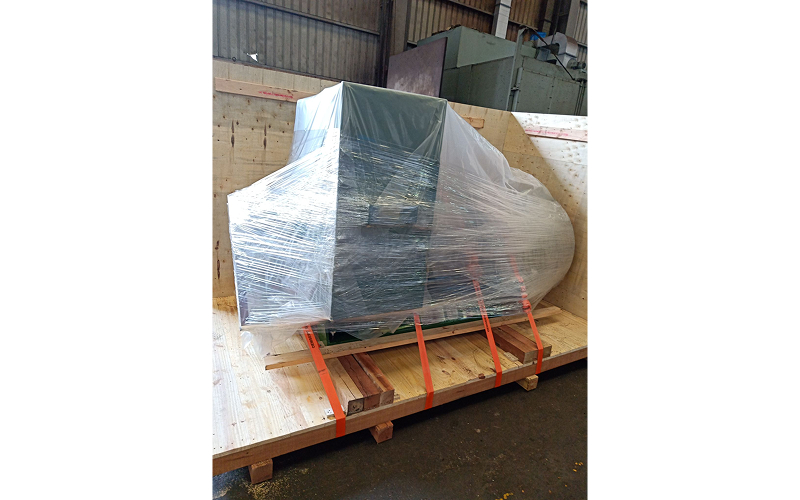
Why Equipment Protection Deserves More Attention
Supply chain planning often centres on transport capacity, delivery schedules, customs clearance, and inventory availability. These are all important, but they do not solve the problem of what happens if the equipment itself is not adequately protected.
Industrial machinery may pass through several stages before it reaches its final destination. It can be lifted from the production floor, moved through a warehouse, loaded for transport, transferred between different modes, stored temporarily, and handled again at the receiving site. Each stage introduces its own physical and environmental risks.
For sensitive assets used in semiconductor logistics, vibration, moisture exposure, movement, or poor restraint can create issues that only become apparent during installation or commissioning. Depending on the equipment, protection may involve moisture barriers, internal bracing, vibration control, or crate designs that support sensitive components throughout repeated lifting and handling.
This is why equipment protection should be treated as part of supply chain resilience, rather than simply as a final shipping requirement, particularly for high-value equipment where damage, delays or rework can have significant operational consequences.
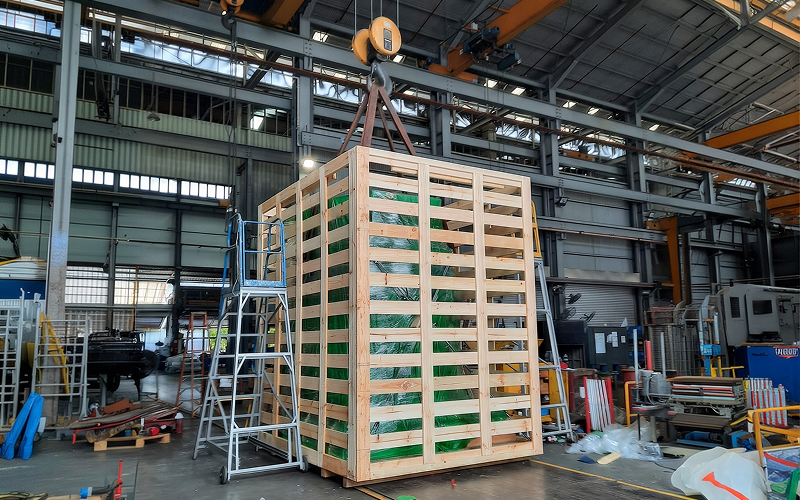
Industrial Packaging Has to Match the Equipment
Industrial equipment does not always fit neatly into standard packaging. The right approach depends on the size, weight, sensitivity, and handling requirements of the machinery, as well as what it will encounter during transport and storage.
Effective high-value equipment packaging starts with understanding factors such as:
- Equipment dimensions and weight
- Centre of gravity and support points
- Sensitive or fragile components
- Lifting and handling requirements
- Expected storage duration
- Transport mode
- Exposure to moisture, vibration, or repeated handling
A large machine with a rigid frame may need a very different packing solution from precision equipment containing sensitive electronics, calibrated components, or delicate internal assemblies.
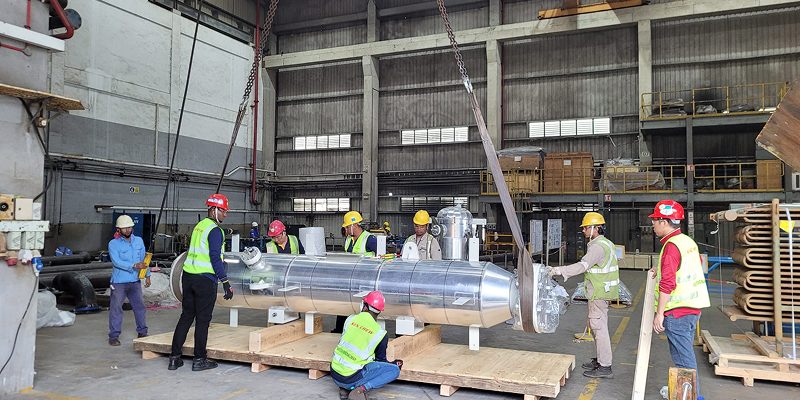
For heavy machinery packaging, the design may need to account for concentrated loads, skid construction, restraint points, forklift access, and lifting arrangements. Precision equipment, on the other hand, may require closer attention to vibration control, moisture barriers, internal bracing, or protection for sensitive components.
The goal is not simply to place machinery inside a timber crate. The packaging should support how the equipment will actually be lifted, stored, transported, and unpacked, so that protection is built into the journey from the start, rather than added as an afterthought before shipment.
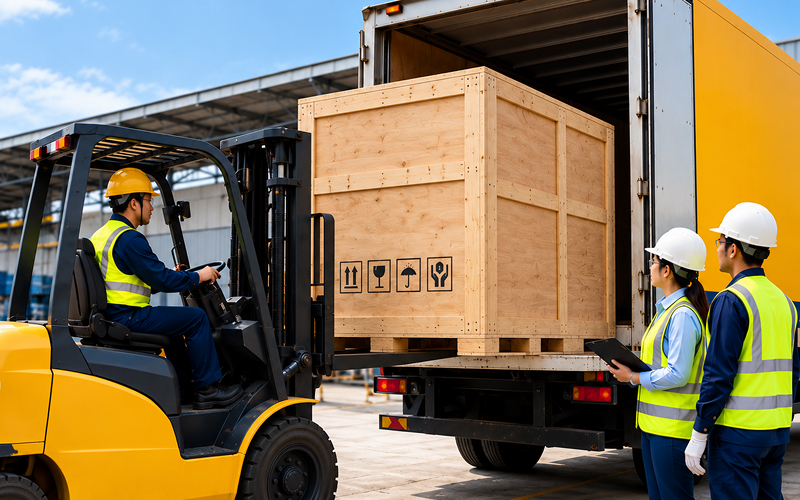
Export Crating Must Account for the Whole Journey
Export shipments often involve more handling than domestic moves. Equipment may pass through warehouses, ports, customs checkpoints, container yards, and various transport providers before reaching its final destination.
That means the crate needs to be planned as part of the journey, not treated as a separate packaging step.
For businesses arranging export crating in Singapore, dimensions are only one of many considerations. The equipment must remain properly supported during lifting, loading, transport, and unloading, and the crate itself should be suited to the handling methods expected along the route.
The same applies to export crating in Malaysia, especially when equipment is moving between manufacturing sites in Johor and logistics hubs, project sites, or customers in Singapore.
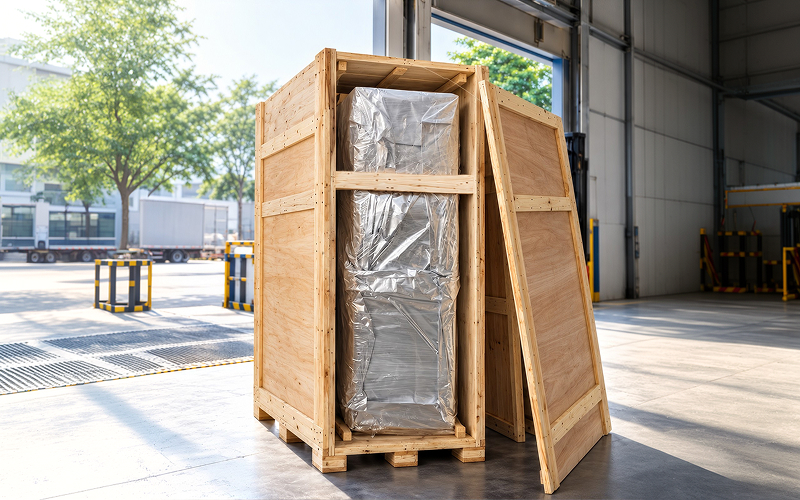
Depending on the cargo and transport conditions, export packing may involve engineered timber crates, skids, moisture barriers, vacuum packing, internal bracing, or other protective measures.
When timber packaging is used for export, regulatory requirements must also be considered. Depending on the shipment and destination, wooden crates, skids, or other wood packaging materials may need to comply with ISPM 15 requirements, including approved treatment and marking. These requirements should be checked as part of the export planning process rather than after the crate has already been built.
The right solution should reflect how the equipment will actually move through the supply chain, including the number of handling points, expected storage conditions, and transport environment, rather than relying on the same packing method for every shipment, as different cargo profiles and transport routes may present very different risk exposures.

Packaging Should Be Planned With the Logistics Strategy
Packaging works best when it is considered early in the planning process, rather than after transport arrangements have already been finalised.
The final crate dimensions can affect vehicle selection, while packed weight may influence lifting requirements. Loading orientation can determine how equipment needs to be restrained, and warehouse access may shape how crates are designed, staged, and moved.
For this reason, packaging should form part of the wider project logistics plan from the outset.
When packing teams, transport planners, warehouse operators, lifting crews, and site personnel work from the same set of information, potential conflicts can be identified earlier, helping prevent costly adjustments later in the movement process. Crates can be designed around planned lifting points, transport equipment can be selected based on the final packed dimensions, and unloading requirements can be considered before the shipment reaches its destination.
This coordination becomes especially important for complex industrial moves, where each stage depends on the one before it. Planning packaging alongside transport, handling, and delivery helps keep the entire movement aligned from preparation through to final placement.
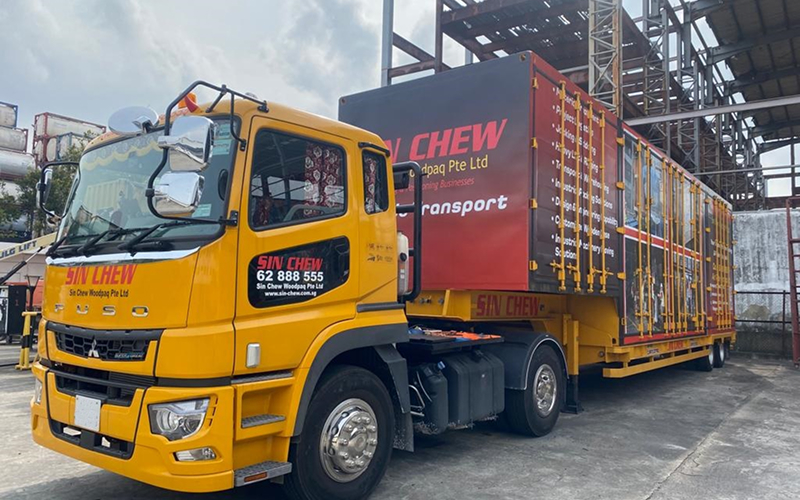
Building Resilience Across an ASEAN Supply Chain
For companies operating across an increasingly connected ASEAN supply chain, resilience also means planning for what happens when the journey does not go as expected.
A shipment may be delayed, equipment may need to remain in storage longer than planned, or a change in transport mode may introduce additional handling. Border or port delays can also extend the time cargo spends in transit.
Packaging designed only for the ideal journey may not account for these situations, especially within an ASEAN supply chain where cargo may pass through multiple logistics providers, facilities and border crossings before reaching its destination. Before dispatch, businesses should consider whether the protection provided matches the value and sensitivity of the equipment, whether moisture and other environmental exposure have been addressed, and whether lifting and restraint requirements are clearly understood.
It is equally important to ensure that packing is coordinated with the warehousing, transport, lifting, and installation teams. Problems can still arise when each party completes its own task correctly, but the movement as a whole has not been planned as one connected process.
Supply Chain Resilience Starts Before Cargo Leaves the Facility
Alternative suppliers, inventory strategies, warehouse capacity, and cross-border routes all contribute to supply chain resilience. But businesses also need to consider whether the physical equipment moving through that network is properly prepared for the journey.
Industrial packing, export crating, moisture protection, warehousing, and transport coordination work best when planned as connected parts of a single logistics process rather than handled separately, helping businesses strengthen supply chain resilience from dispatch through delivery.
At Sin Chew Woodpaq, we support manufacturers, exporters, and project owners with industrial packing, customised export crating, warehousing, cross-border coordination, and protection for high-value machinery and equipment, across Singapore, Malaysia and the wider regional supply chain.
If you are preparing equipment for a cross-border move, export shipment, or complex industrial project, speak with our team about your requirements. We can assess the equipment dimensions, handling points, transport route, storage conditions, export requirements, and delivery constraints before developing a packing and logistics approach suited to the journey.