Key Takeaways
- As a logistics solutions company, Sin Chew integrates ESG standards directly into daily operations rather than treating them as separate initiatives.
- Environmental efforts focus on smarter route planning, responsible material sourcing, and gradual fleet improvements aligned with national sustainability goals.
- Precision handling in regulated and high-value industries reflects structured processes, audit readiness, and operational discipline.
- Community involvement, support for national events, and recognised certifications demonstrate long-term accountability beyond commercial performance.
Introduction
Sustainability in logistics has moved well beyond emissions targets and greener materials. Today, it is framed more broadly through ESG, environmental, social, and governance principles that shape how organisations operate responsibly and transparently. For Sin Chew Woodpaq, operating as a responsible logistics solutions company means looking at the entire picture, from how routes are planned to how people are supported, and how standards are upheld.
As Singapore pushes towards a lower-carbon future, supply chains are under sharper scrutiny. Clients now ask direct questions about sourcing practices, workplace safety, and governance structures. ESG considerations sit firmly alongside cost, speed, and reliability in procurement decisions.
For us, this shift is not disruptive. It reflects how we have always approached our work. Responsibility runs through our planning systems, specialised handling protocols, community contributions, and structured governance processes that guide our daily operations.
Environmental Responsibility Starts with Smarter Operations
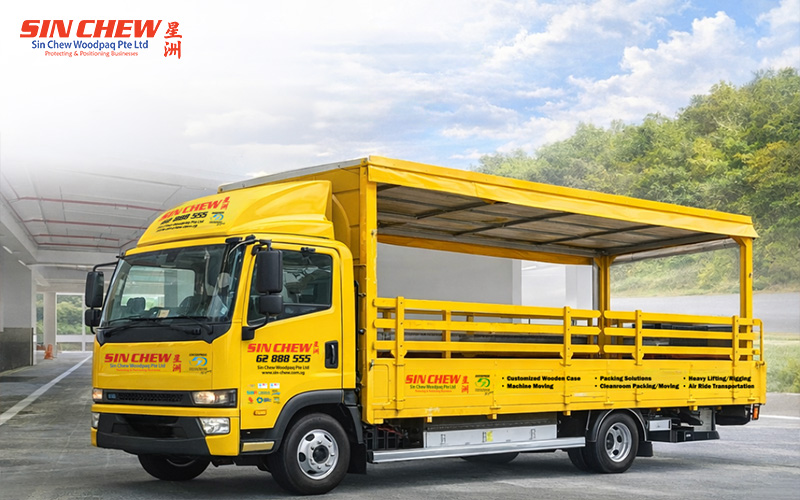
Environmental responsibility shows up in the details of how we plan our every move. Routes are mapped with optimisation tools and supported by ERP integration to cut unnecessary mileage and reduce fuel consumption. Equipment scheduling is aligned to avoid empty runs and improve load efficiency, strengthening sustainable logistics practices while keeping projects on schedule.
Material selection reflects the same discipline. ISPM 15-certified wood packaging and FSC-certified timber are used to meet international standards and support responsible green supply chain management. In cross-border operations, these decisions carry weight, ensuring compliance while reducing environmental strain.
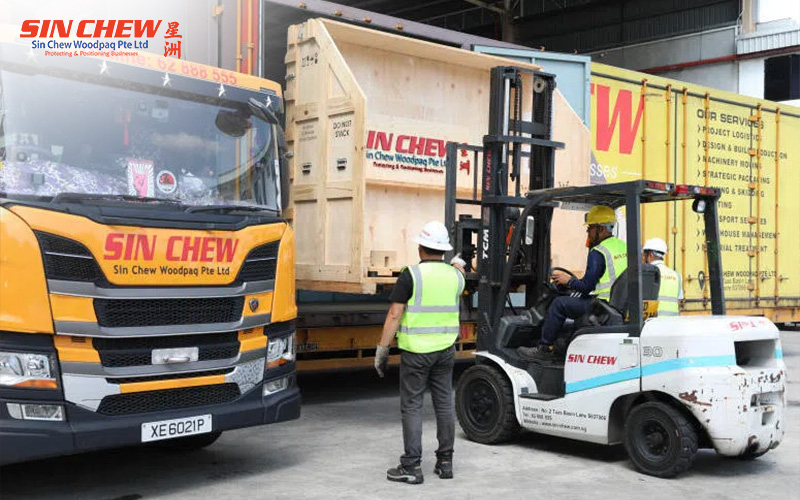
For demanding assignments such as machinery transport, careful load balancing, secure anchoring, and specialised lifting systems are essential. Even here, fleet planning considers cleaner alternatives. Electric vehicles are gradually introduced where operating conditions make sense. Environmental progress is approached pragmatically, guided by operational realities rather than optics.
ESG Standards in High-Precision Industries
Standards rise sharply in regulated industries. In semiconductor logistics, environmental stability, shock control, contamination prevention, and documentation accuracy are tightly governed. Meeting these expectations requires structured workflows, trained teams, and clearly defined compliance systems that leave little room for error.
When evaluating a specialised cargo logistics company, clients look beyond lifting capability and transport speed. Audit readiness, governance documentation, and sustainability alignment are now part of the conversation. Procurement decisions increasingly reflect expectations around traceability and long-term accountability.
For a responsible logistics solutions company, ESG is not layered on top of operations. It is built into how sensitive cargo is handled, monitored, and reported at every stage of movement.
Social Impact Through Active Community Engagement
Sin Chew’s capabilities have extended beyond commercial projects into national and community efforts. We supported the logistics coordination for the Youth Olympic Games and the Southeast Asian Games, where large-scale infrastructure movements had to be delivered with careful timing and coordination.
We have also assisted relocation efforts at Dakota Crescent during housing transitions and mobilised support during disaster relief operations that required a swift, organised response.
Through participation in Hair for Hope, we helped raise awareness and funds for children affected by cancer. Mentorship through the Supply Chain Challenge further reflects our commitment to developing future talent in the logistics sector.
These sustained efforts reflect corporate social responsibility woven into our culture rather than treated as occasional initiatives.
Supporting National Infrastructure and Cultural Milestones
Behind the scenes at Singapore’s National Day Parade, we have overseen the safe and timely transport of staging structures and critical event infrastructure for more than a decade. Tight deadlines and public visibility leave little margin for error.
Delivering under these conditions calls for disciplined coordination, detailed planning, and strict safety controls. The same standards guide our broader operations as a logistics solutions company, where documented procedures, risk management frameworks, and governance oversight form the backbone of consistent ESG compliance.
Governance That Builds Long-Term Trust
ISO 9001 and ISO 45001 certifications formalise our quality management and occupational safety systems, setting clear standards for how projects are executed and risks are controlled. BizSafe Star certification further strengthens workplace safety and internal risk management practices.
Documentation, internal audits, and continuous improvement processes are integrated into daily operations rather than confined to policy manuals. Governance becomes part of how decisions are made on the ground, reinforcing accountability and building sustained trust with clients and partners.
Conclusion: Responsibility Integrated Into Performance
Environmental optimisation, specialised handling standards, community involvement, and certified governance systems shape how we operate as a logistics solutions company.
Across ASEAN supply chains, expectations around transparency and sustainability are rising steadily. Businesses now evaluate partners not only on cost and speed, but on accountability, compliance, and long-term reliability.
If your organisation is aligning its logistics strategy with ESG priorities, connect with us to explore how our specialised capabilities can support resilient, responsible operations built for the long term.